
If you’ve watched a window cleaner working around Swindon with a long pole and no ladder, you’ve probably seen pure water cleaning in action. It looks a bit strange the first time. No bucket of soapy water, no squeegee, no chamois leather. Just a pole, a brush, and water running through it.
Here’s what it actually is, and why I use it.
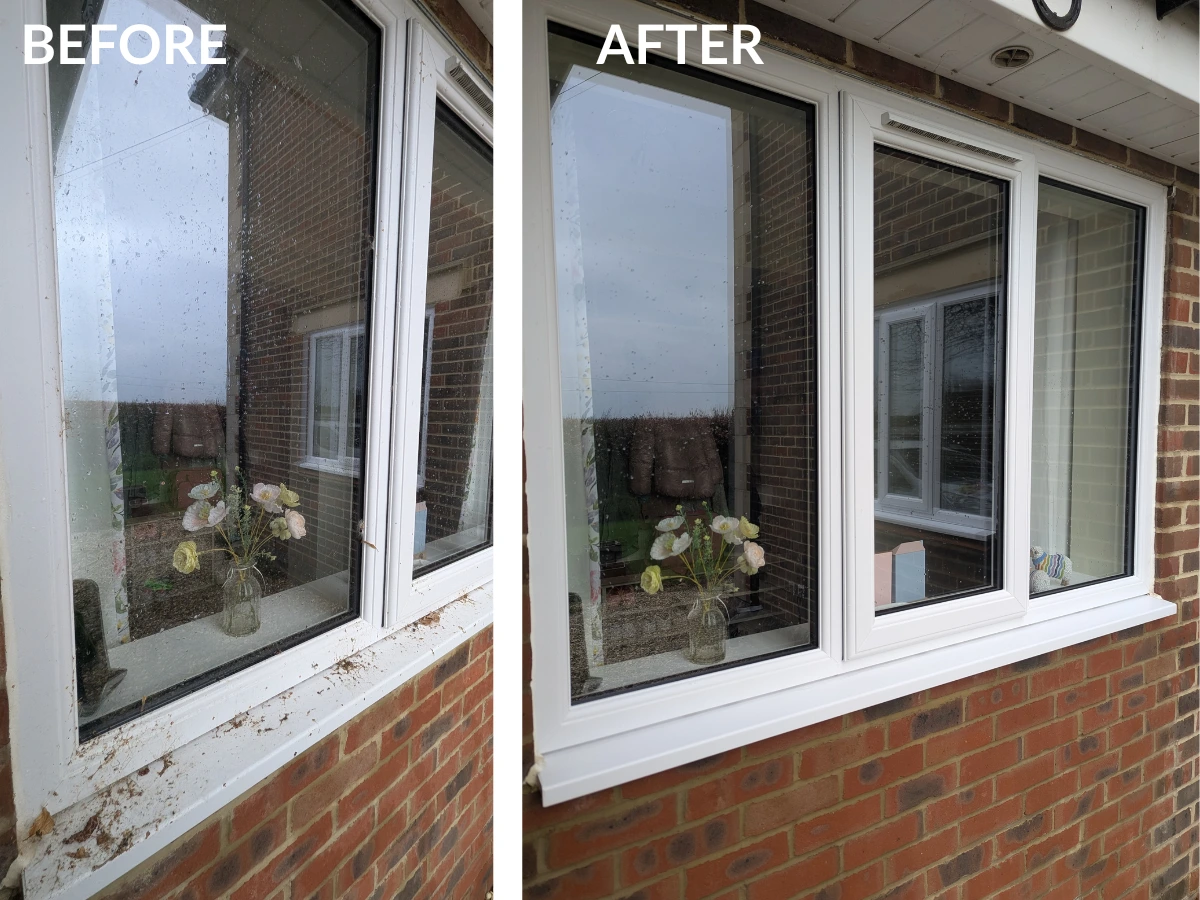
The difference a proper clean makes, glass and frames together.
What Pure Water Actually Is
Tap water has minerals dissolved in it: calcium, magnesium, and various salts. When normal tap water dries on glass, those minerals stay behind as spots. It’s the same white residue you see building up on a shower screen.
Pure water has had those minerals stripped out. The proper term is deionised or purified water. Once the minerals are gone, the water dries off the glass without leaving anything behind.
I run my water through a filter system that takes it down to as close to zero parts per million of dissolved solids as I can get it. The cleaner the water going on, the cleaner the glass when it dries.
Why It Works Without Soap
Pure water is “hungry.” With nothing dissolved in it, it actively pulls dirt off whatever surface it touches. That’s the bit that surprises people. The water itself is doing most of the work.
I scrub the glass and frames with a soft brush on the end of the pole, the dirt lifts into the water, and I rinse it all down. The glass is left wet, and as it dries it dries clean.
Why I Use a Pole Instead of a Ladder
The pole reaches up to the second floor and beyond from the safety of the ground. Two reasons that matters.
First, safety. Most window cleaning accidents involve ladders. Working from the ground is safer for me, and it means I’m not leaning ladders against your gutters, walls, or window frames every visit.
Second, access. The pole gets to windows that ladders struggle with. Awkward extensions, conservatories, anything over a flat roof or a flower bed. I can clean it without trampling anything.
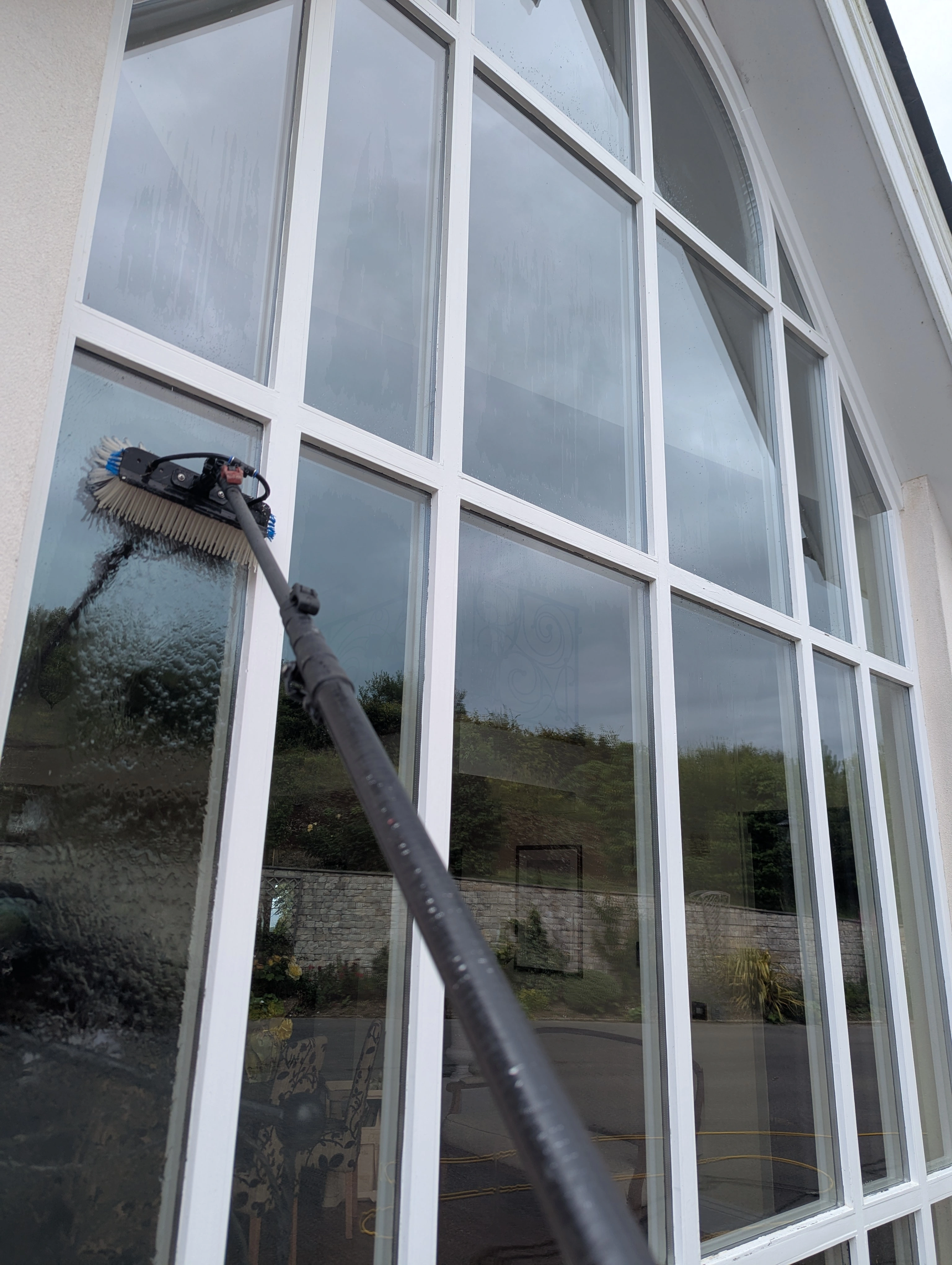
The reach pole cleans upper floors safely from the ground, no ladder needed.
Interested in a regular 8-weekly clean for your home?
Get a Free QuoteThe Frames and Sills Get Done Too
This is where pure water cleaning earns its keep. The brush cleans the frames, sills, and the glass in one pass. With a traditional squeegee, the frames often get skipped or just wiped over with a damp cloth. With the pole, they get scrubbed properly every visit.
That’s why pure water cleaning tends to give you a cleaner-looking window overall, not just clean glass with grubby frames around it. A few of my customers across Swindon and Wiltshire have said their frames look better than they have in years, and it’s just because they’re getting a proper scrub every eight weeks.
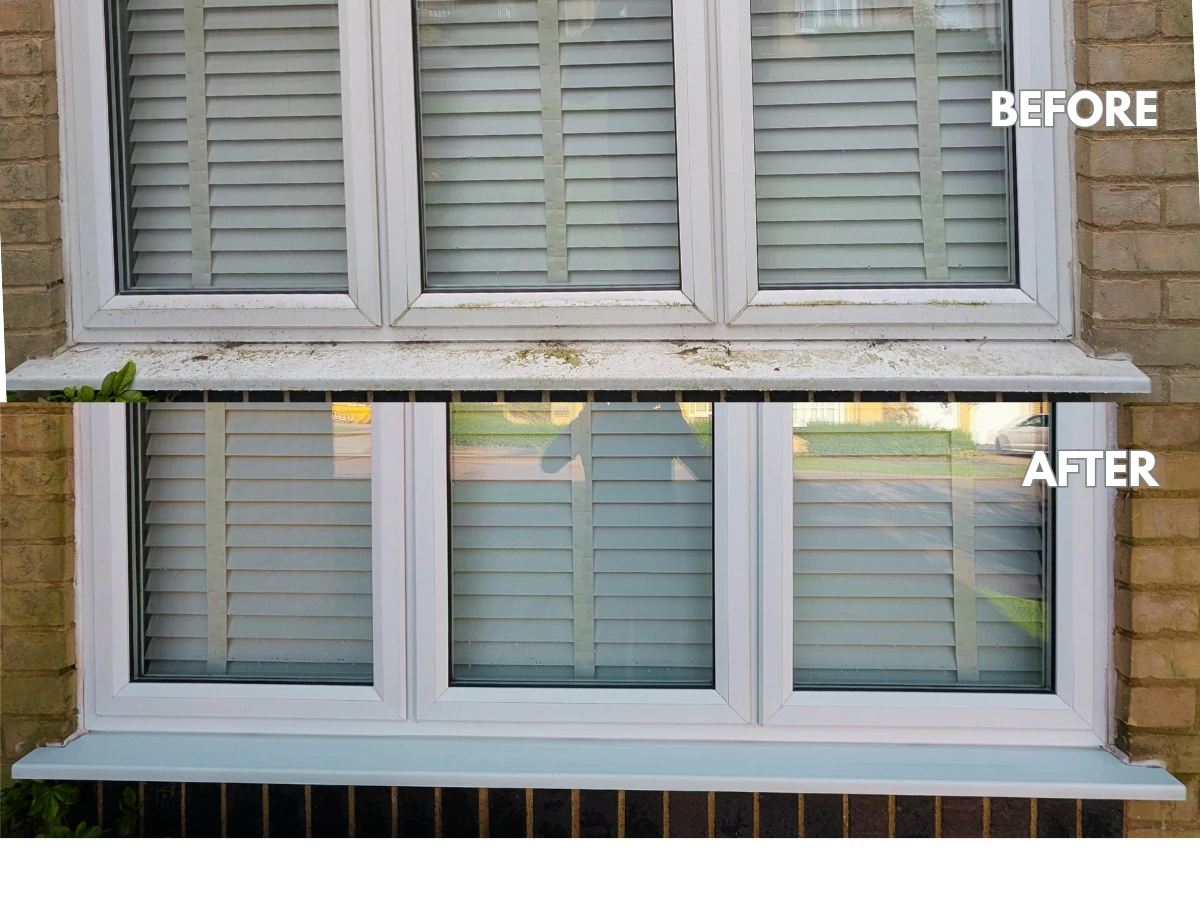
Frames and sills cleaned every visit, not just the glass.
“Jack did a brilliant job cleaning our windows in an efficient tidy manner. He takes pride in his work, the window frames look cleaner than they have been for ages.”
Better for the Environment, Too
No detergents going down the drain. No chemicals in contact with your plants or paintwork. The only thing leaving the property is the dirt that was already on the house.
When I Might Use a Cleaning Product
For most regular cleans, pure water and a brush is all that’s needed. The exception is a tough first clean: builders’ residue, sap, or windows that have been left for years. In that case I’ll use a light cleaning product to get them back to a baseline, and after that it’s back to pure water for the regular round.
The Short Version
Pure water cleans glass without leaving spots because there’s nothing in it to leave behind. The pole reaches high windows safely from the ground and cleans frames properly along with the glass. It’s the method I use as standard, and it’s a big part of why your windows stay looking clean between visits.
If you’d like a quote for a regular clean in Swindon or the surrounding villages, drop me a message on WhatsApp or fill in the form below. I usually reply within a few hours.